
Finding specialized OCD care can make treatment easier to navigate, especially when symptoms interfere with work, relationships, routines, or daily functioning. Evidence-based options may include exposure and response prevention (ERP), psychiatric medication management, and specialized interventional treatments when standard approaches have not provided adequate improvement.
A qualified clinician can evaluate symptom severity, previous treatment, functional impact, and individual goals before developing an appropriate treatment plan. Access to care may also include in-person treatment, telehealth, or specialty services at a clinic that serves patients in the surrounding area.
Key Takeaways
- ERP Is the Gold Standard Therapy: General counseling or non-specific CBT is often insufficient; exposure and response prevention (ERP) is the primary evidence-based psychotherapy specifically designed to reduce OCD compulsions.
- Proximity Should Not Override Expertise: Finding an experienced, licensed OCD specialist, whether through in-person visits or compliant telehealth platforms, delivers better long-term clinical outcomes than choosing a nearby generalist.
- Advanced Modalities Exist for Resistant Cases: For individuals who do not achieve remission through medication or standard therapy alone, FDA-cleared interventional modalities like NeuroStar TMS provide effective adjunctive care.
What Should You Know Before Choosing OCD Care?
The right starting point is to compare clinical specialization, treatment methods, accessibility, and level of care before scheduling an appointment. OCD treatment should be matched to the patient’s symptoms and treatment history rather than selected solely because a provider is geographically convenient.
ERP is a specialized form of cognitive behavioral therapy designed specifically for OCD. More intensive services may also be considered when symptoms substantially interfere with functioning or when routine outpatient treatment is not sufficient.
When evaluating a potential provider, consider:
- Clinical Experience: Ask whether the clinician routinely treats OCD rather than simply accepting patients with an OCD diagnosis.
- Treatment Method: Confirm whether structured ERP is available when psychotherapy is part of the treatment plan.
- Provider Credentials: Verify that the clinician holds the appropriate state license and relevant clinical qualifications.
- Visit Format: Ask whether appointments are offered in person, through telehealth, or through a hybrid model.
- Insurance: Confirm participation in your specific insurance network and ask about authorization requirements.
- Level of Care: Determine whether the practice provides routine outpatient treatment or can coordinate higher levels of care when clinically necessary.
Directly contacting a practice can also help clarify current appointment availability and whether its services match your age group, diagnosis, and treatment needs.
Which Type of OCD Provider May Be Appropriate?
OCD care may involve different mental health professionals depending on the patient’s symptoms and treatment plan. Psychotherapists, psychologists, psychiatrists, and psychiatric mental health nurse practitioners can contribute different types of clinical care.
A therapist or psychologist with specific OCD experience may provide structured ERP and other evidence-based psychotherapy. A psychiatric prescriber can evaluate symptoms, consider medication options, and monitor treatment response when medication is clinically appropriate.
The distinction between general CBT and OCD-focused ERP is important. ERP uses planned exposure to situations, thoughts, or triggers associated with OCD while helping the patient reduce the compulsive response.
According to the National Institute of Mental Health:
“ERP is a specific form of CBT that can reduce compulsive behaviors, including for some people who have not responded adequately to medication.”
National Institute of Mental Health
When contacting a prospective provider, you can ask:
- Do you provide structured ERP specifically for OCD?
- Do sessions include planned between-session practice?
- Do you address mental compulsions and reassurance seeking?
- How frequently do you treat patients with OCD?
- Do you treat the relevant age group?
These questions can help distinguish a provider with specific OCD experience from a general mental health practice that treats a broad range of conditions.
How Can You Find OCD Treatment in Your Area?

A local search is most useful when geographic access is considered alongside clinical specialization, insurance coverage, and treatment intensity. Searching solely by geographic distance may connect you with a convenient general mental health provider who does not offer structured, disorder-specific care.
When identifying nearby psychiatric clinics or specialized therapists, prioritize evidence-based protocols such as structured ERP and verified clinical credentials over simple proximity. Always confirm state licensing, treatment modalities, and appointment availability before scheduling care.
Patients can generally evaluate four categories of care:
- Outpatient psychotherapy: Individual treatment such as structured ERP for patients who can maintain daily activities.
- Psychiatric care: Evaluation and medication management when a psychiatric prescriber is appropriate.
- Intensive outpatient or partial hospitalization: More structured treatment for symptoms requiring greater clinical support.
- Residential or inpatient services: Higher levels of care for circumstances that cannot be safely managed through routine outpatient treatment.
These levels of care are not interchangeable. The appropriate setting depends on symptom severity, functional impairment, safety concerns, previous treatment response, and clinical assessment.
Patients seeking regional psychiatric services can review Embracing Life Today locations to understand available geographic and consultation options.
Can Telehealth Expand Access to OCD Care?
Telehealth may expand access when specialized OCD treatment is not readily available nearby. However, the clinician must be legally permitted to provide care in the state where the patient is physically located during the appointment.
Before scheduling a virtual visit, confirm:
- Whether the provider treats patients in your state.
- Whether OCD-focused services are available virtually.
- Whether the practice accepts your insurance.
- Which age groups the clinician treats.
- Whether the provider offers outpatient or higher levels of care.
Availability can change, so patients should confirm credentials, insurance participation, treatment format, and current appointment openings directly with the provider.
What Does Evidence-Based OCD Treatment Include?
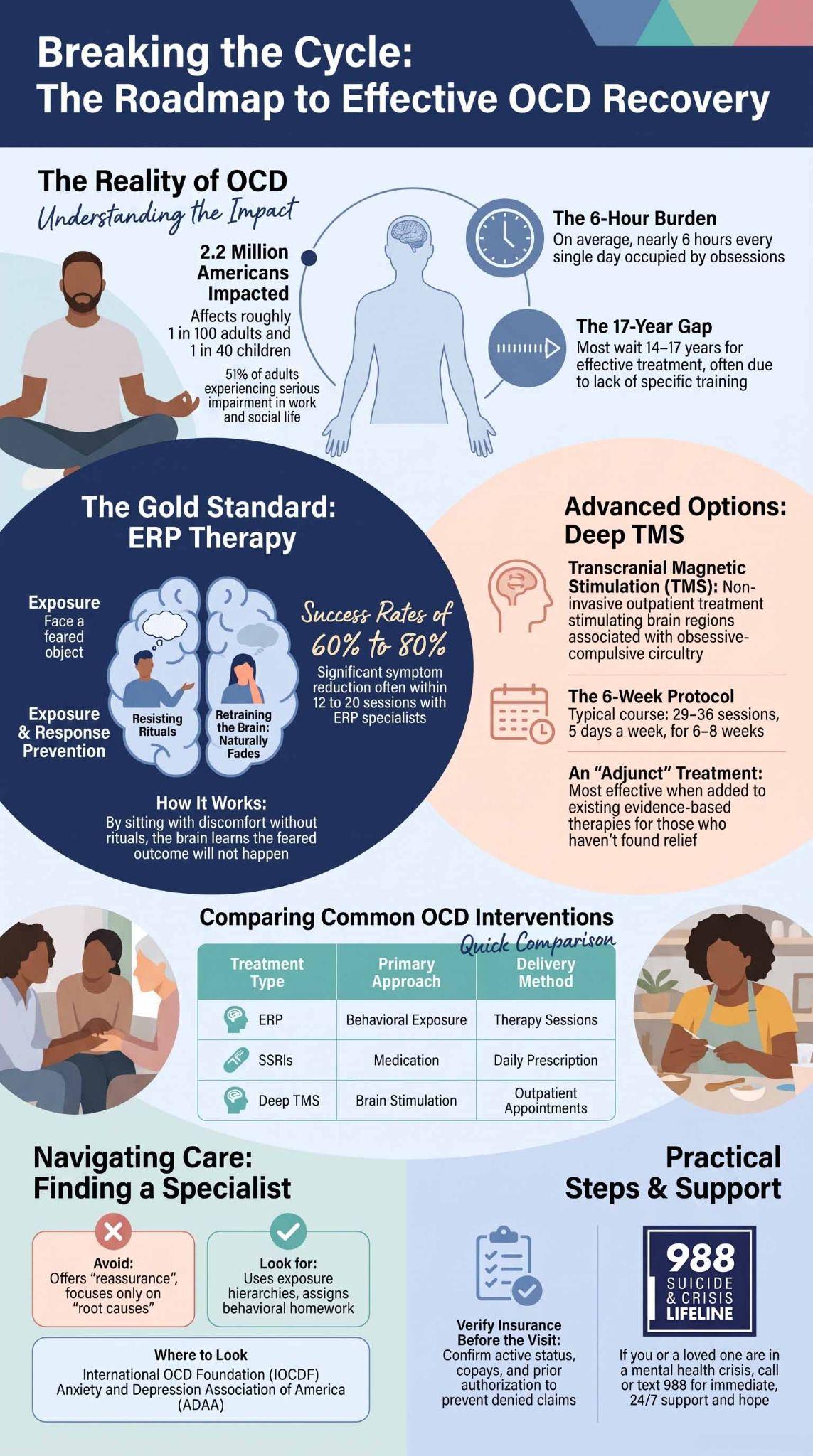
Evidence-based OCD care may include ERP, medication management, or a combination of approaches. Treatment intensity should be adjusted according to symptoms, functional impairment, previous treatment response, and clinical assessment.
ERP involves planned exposure to situations, thoughts, or triggers that produce OCD-related distress while reducing the compulsive response. Treatment may address contamination fears, checking, symmetry concerns, intrusive harm thoughts, rumination, mental reviewing, reassurance seeking, and other compulsive patterns.
Intrusive thoughts do not automatically represent a person’s wishes, values, intentions, or character. A qualified clinician can help patients understand the relationship between intrusive thoughts, anxiety, avoidance, and compulsive behaviors.
Medication can also be considered when a qualified prescriber determines that it is appropriate. Psychiatric medications may require several weeks of treatment before meaningful improvement can be evaluated, and patients should not change or discontinue medication without discussing the decision with their healthcare provider.
When May Interventional Treatment Be Considered?
Some patients continue to experience significant symptoms despite appropriate medication and psychotherapy. In these circumstances, a psychiatric specialist may evaluate whether an additional intervention is appropriate based on diagnosis, treatment history, and individual risk factors.
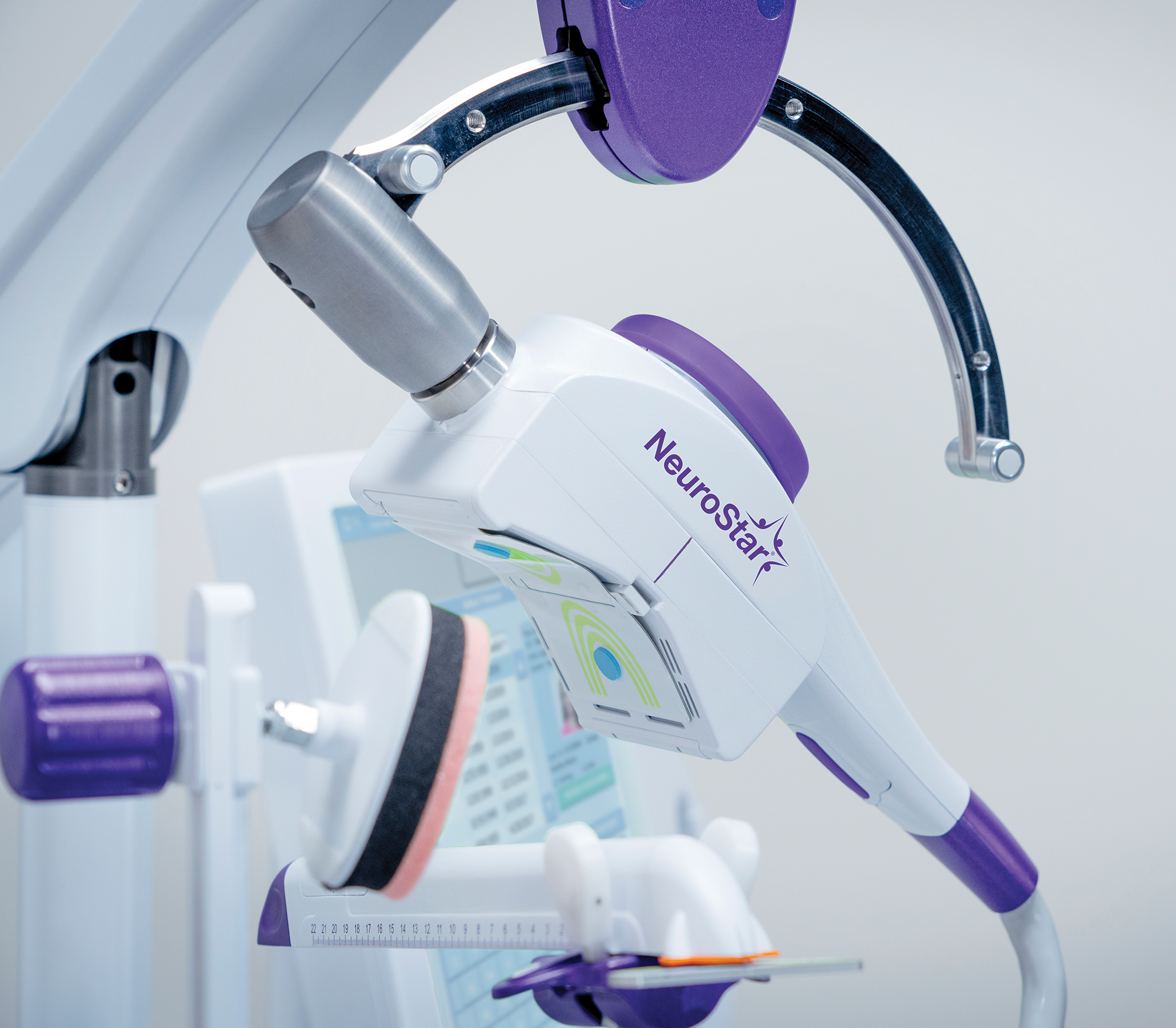
NeuroStar TMS is an FDA-cleared interventional treatment option for eligible adults with OCD. It uses magnetic stimulation rather than systemic medication and is administered in an outpatient clinical setting.
According to the U.S. Food and Drug Administration:
“NeuroStar Advanced Therapy is an FDA-cleared system for adjunctive treatment of adult OCD.”
U.S. Food and Drug Administration
NeuroStar TMS is not intended to replace appropriate first-line OCD treatment. Clinical suitability requires an individual evaluation that considers diagnosis, previous treatment, current symptoms, and relevant medical factors.
Patients can learn more about FDA-cleared TMS therapy for OCD as part of their treatment planning process.
TMS is non-invasive and performed in an office while the patient remains awake. Temporary scalp discomfort or headache can occur, while seizure is a known but uncommon risk that requires appropriate screening and clinical precautions.
Patients should also discuss relevant implants, conductive or magnetic-sensitive metal near the head, seizure history, and other medical considerations before treatment.
Insurance coverage varies according to the plan, diagnosis, eligibility requirements, and authorization criteria. Patients should verify their individual benefits instead of assuming that a particular treatment will be covered.
What Should You Do During an OCD Crisis?

Routine OCD treatment can generally be arranged through outpatient services when a person is clinically stable. An emergency situation requires a different response and should not depend on waiting for a routine appointment or completing an online intake process.
In the United States, people experiencing a mental health crisis can call or text 988 for the 988 Suicide & Crisis Lifeline. Imminent danger or urgent medical needs warrant calling 911 or going to the nearest emergency department.
Someone experiencing an immediate safety concern should seek assistance from qualified emergency professionals. Acute symptoms should not be managed solely through unsupervised treatment changes or self-directed ERP exercises.
Treatment costs can vary based on insurance status, deductibles, copays, coinsurance, provider network, treatment frequency, and level of care. Before beginning treatment, patients can ask about:
- In-network versus out-of-network status.
- Deductible and copay requirements.
- Prior authorization requirements.
- Telehealth coverage.
- Self-pay rates and available payment information.
How Can You Choose the Right OCD Care for Ongoing Support?
Choosing OCD treatment involves more than finding the closest available provider. Clinical specialization, treatment method, insurance participation, appointment access, and the level of support offered can all affect whether a practice is appropriate for your needs.
Before scheduling an initial evaluation, consider asking:
- Does the clinician regularly treat OCD?
- Is structured ERP available?
- Does the provider treat my age group?
- Can the practice address medication needs when appropriate?
- Does the practice offer telehealth?
- Does my insurance cover the services?
- Are specialized treatments available when clinically indicated?
Finding the Right OCD Treatment at Embracing Life Today
Selecting the right OCD treatment requires balancing clinical expertise, insurance coverage, and personalized care intensity. The closest provider may not always offer the specialized exposure therapies you need. At Embracing Life Today, our psychiatric team provides comprehensive outpatient evaluations, telehealth support, and advanced interventional care across Florida. If standard methods have not brought enough relief, contact our clinical team today to explore your next step toward recovery.
FAQ
How can I find specialized OCD treatment near me?
To find qualified OCD treatment in your area, search for state-licensed clinicians or psychiatric practices with dedicated training in exposure and response prevention (ERP). Prioritize specialized clinical experience over mere proximity, and verify that the provider accepts your insurance, treats your specific age group, and offers appropriate care formats, whether through in-person outpatient visits or compliant telehealth.
How does an OCD treatment center differ from an outpatient therapist?
An OCD treatment center may provide access to multiple professionals or different levels of care, while an outpatient therapist generally provides scheduled psychotherapy sessions. The appropriate setting depends on symptom severity, functional impairment, and clinical needs.
Can OCD treatment include medication?
Yes. A qualified psychiatric prescriber may consider medication as part of an OCD treatment plan when clinically appropriate. Medication should be monitored by the prescribing clinician, and patients should not change their dosage without professional guidance.
Can NeuroStar TMS be part of an OCD treatment plan?
NeuroStar TMS can be considered as an adjunctive treatment option for eligible adults with OCD. The system is FDA-cleared for adult OCD, and suitability should be determined through an individual clinical evaluation.
Where can you seek care if standard OCD treatments have not provided enough relief?
You can seek an evaluation with a clinician experienced in OCD treatment and discuss your previous therapy, medication history, current symptoms, and treatment goals. A qualified provider can help determine whether another psychotherapy approach, medication strategy, or specialized intervention may be appropriate.
References
- https://www.nimh.nih.gov/health/topics/obsessive-compulsive-disorder-ocd
- https://www.accessdata.fda.gov/scripts/cdrh/cfdocs/cfpmn/pmn.cfm?ID=K212289