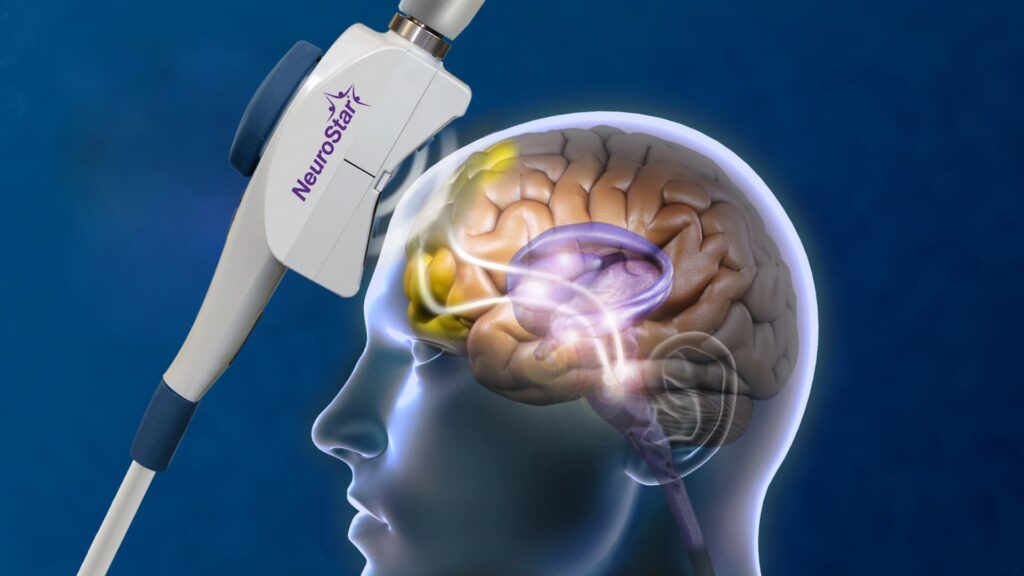
TMS therapy for depression delivers focused magnetic pulses to stimulate underactive nerve cells in brain regions responsible for mood regulation. This outpatient intervention provides clinically proven symptom relief for individuals living with treatment-resistant depression who have not improved through medication or traditional psychotherapy alone.
The process is designed to influence brain activity linked to depression symptoms. For some people, TMS may offer another treatment option when medication or therapy alone hasn’t helped enough. Keep reading to learn how TMS works.
Key Takeaways
- TMS is a noninvasive option for selected patients with major depressive disorder.
- Treatment length and results vary by protocol, including rTMS and iTBS.
- Safety screening and insurance eligibility are important before treatment.
How Does TMS Therapy Work?
TMS uses a magnetic coil placed against the scalp. The coil sends short magnetic pulses into a specific area of the brain.
For depression, treatment usually targets an area in the prefrontal cortex. This part of the brain is involved in mood and other mental processes. The magnetic pulses affect nerve cells in the area and the brain circuits connected to it.
“rTMS is a precise and noninvasive brain stimulation tool used to treat depression and other mental disorders.” – National Institute of Mental Health (NIMH)
The treatment does not require surgery. Nothing is placed inside the skull.
During a session, the patient sits in a treatment chair. The provider positions the coil against the head and adjusts the device based on the treatment plan. The machine then delivers repeated pulses.
A patient may hear clicking from the device. There may also be a tapping or knocking feeling on the scalp. Some patients notice movement in nearby facial muscles. Mild scalp discomfort can happen too.
It can take some getting used to.
TMS treatment is usually given more than once. A standard course may involve sessions five days a week for several weeks, although treatment schedules can differ. Some newer protocols use several sessions in one day.
The exact schedule depends on the TMS device, treatment protocol, and clinical situation. A provider should explain the plan before treatment begins.
Who Can Receive TMS For Depression?

TMS may be considered for people with major depressive disorder who have not improved enough with other treatments. This can include antidepressant medication or psychotherapy.
A provider will review the person’s medical history before treatment. The review may include current medications, past treatments, other health conditions, and any implanted medical devices.
That screening matters because TMS uses a strong magnetic field.
Certain metal objects or electronic implants can create safety concerns. Patients should tell the treatment team about implanted devices, metal in the body, or a history of seizures.
TMS is not the same as ECT, or electroconvulsive therapy. ECT uses electrical stimulation to produce a controlled seizure and is performed with anesthesia. TMS uses magnetic pulses and does not require anesthesia.
Both treatments affect brain activity, but they do it in very different ways.
What Happens During A TMS Session?

A TMS session takes place while the patient is awake. There is no need for general anesthesia.
The patient sits in a chair while the provider places the treatment coil against the scalp. The provider then delivers magnetic pulses according to the treatment plan.
The sensation can be unusual at first. A patient may feel tapping on the scalp or twitching near the forehead or face. The machine also makes repeated clicking sounds.
Most sessions take between several minutes and about 40 minutes, depending on the treatment method. A standard treatment course may involve frequent visits over several weeks.
After the session, most patients can leave the clinic and return to normal activities. TMS does not normally require a recovery period caused by anesthesia.
Still, some patients may have a headache or scalp discomfort after treatment. These effects are usually short lived.
Is TMS FDA Cleared For Depression?
Yes. Certain TMS devices are FDA cleared for specific uses, including the treatment of major depressive disorder.
The first TMS device was FDA cleared for depression in 2008. Since then, additional devices and treatment protocols have received clearance for specific uses. The exact indication depends on the device and its clearance.
This distinction matters. A TMS device being FDA cleared does not mean every TMS device can be used for every type of depression or every patient.
The provider should explain which device and protocol are being used and whether the treatment fits its cleared indication.
TMS is also not a cure for depression. It is a treatment that may reduce symptoms for some patients.
What Are The Common Side Effects?
TMS is generally well tolerated, but side effects can occur.
Common effects include headache and discomfort where the coil touches the scalp. Some patients may also experience tingling or twitching during treatment.
These effects may be more noticeable during early sessions. The treatment team can adjust the treatment settings if needed.
A seizure is a rare but serious possible side effect. The risk can depend on several factors, including the treatment settings and a person’s medical history.
That is why the screening process should happen before treatment starts.
Patients should also tell the provider about medications that may affect seizure risk. The provider can decide whether any additional precautions are needed.
If a new or severe symptom occurs during treatment, tell the medical team. Do not ignore it.
Can TMS Be Used With Medication?
TMS can be part of a broader depression treatment plan alongside other mental health and TMS services. Some patients continue taking antidepressant medication during TMS treatment.
Others may also continue psychotherapy.
The treatment plan depends on the person’s symptoms, medical history, previous treatment response, and other factors. Medication should not be stopped or changed without guidance from the prescribing clinician.
There is no single treatment plan that fits every patient.
A mental health professional can explain how TMS may fit with the other treatments already being used.
How Long Does TMS Take To Work?
TMS usually requires repeated treatment sessions. A patient should not expect one session to provide the full treatment effect.
Some people notice changes in depression symptoms during treatment. Others may need more time. The response varies from person to person.
Providers may check symptoms during the treatment course. They can use those changes to decide whether the current treatment plan should continue.
A standard course often involves frequent sessions for several weeks. Newer treatment methods may use a different schedule, with TMS therapy in Tampa available through Embracing Life Today.
The number of sessions is not the same for every patient. The treatment team should explain what is expected before treatment begins.
How Effective Is TMS For Depression?

TMS can reduce depression symptoms in some people, particularly people who have not improved enough with medication or other treatments.
“Active rTMS resulted in a larger depressive symptom reduction than sham protocol.” – PubMed
But TMS does not work for everyone. Some patients have a strong response. Others have a smaller response, or no meaningful change.
Research continues to examine why some people respond better than others. Brain activity, treatment location, treatment settings, and individual health factors may all matter.
A 2024 NIMH research study also looked at how TMS affects brain circuits linked to depression. The findings may help researchers improve how treatment targets these circuits in the future.
That does not mean every patient will have the same result.
TMS should be viewed as one treatment option, not a guaranteed solution.
What Is The Difference Between TMS And ECT?

TMS and ECT are both brain stimulation treatments, but the procedures are not the same.
TMS uses magnetic pulses. The patient stays awake during treatment, and anesthesia is not required.
ECT uses electrical stimulation to produce a controlled seizure. The patient receives anesthesia during the procedure.
ECT is often used when depression is severe or when a faster response is needed. TMS is usually given as a series of outpatient sessions.
TMS also does not produce the same type of seizure used during ECT.
The choice between these treatments depends on the clinical situation. A psychiatrist or other qualified clinician can explain the differences and discuss which option may be appropriate.
Is TMS Safe?
TMS has a generally favorable safety profile when a trained medical team uses an appropriate device and treatment protocol.
That does not mean it has no risks.
Headache and scalp discomfort are among the more common side effects. A seizure is rare, but it remains a known risk.
The magnetic field also means certain implants need careful review before treatment. Patients should report implanted electronic devices and metal objects to the treatment team.
A provider may also ask about a history of seizures, medications, and other medical conditions.
Do not leave out medical information during the screening process. It helps the treatment team decide whether TMS is appropriate and how it should be delivered.
Exploring TMS Therapy for Depression at Embracing Life Today
Deciding whether to begin TMS therapy for depression starts with an individualized clinical consultation to evaluate your diagnostic history and treatment goals. When prescription antidepressants or routine counseling fail to produce adequate remission, targeted magnetic stimulation offers a proven path forward. At Embracing Life Today, our clinical team provides FDA-cleared NeuroStar TMS protocols tailored to your schedule and recovery needs. Contact our team today to discuss treatment options, verify insurance benefits, and schedule your comprehensive consultation.
If you or a loved one are experiencing acute distress, thoughts of self-harm, or a mental health crisis, call or text 988 to connect with the Suicide & Crisis Lifeline immediately.
FAQs
How effective is a TMS treatment for depression?
Clinical studies demonstrate that TMS therapy for depression produces significant symptom reduction and clinical remission in many patients who have not responded to standard antidepressants. Because magnetic pulses stimulate neural connectivity over time, regular attendance across a full multi-week protocol yields the highest rate of functional improvement.
How quickly do patients notice improvements from daily TMS sessions?
TMS usually requires repeated sessions before meaningful improvement becomes apparent, although some patients may notice changes earlier in treatment.
Is TMS painful?
TMS can cause scalp tapping, localized discomfort, or headache, but these effects are generally temporary and can often be managed during treatment.
Can TMS be combined safely with existing antidepressant prescriptions?
Yes, TMS can be used alongside antidepressant medication when the treating psychiatric clinician determines that combined treatment is appropriate.
What happens if depressive symptoms return after completing a TMS course?
A recurrence can lead to reassessment for additional treatment, including another TMS course or maintenance sessions, depending on the patient’s previous response and current clinical status.
References
- https://www.nimh.nih.gov/news/science-updates/2024/noninvasively-stimulating-deep-brain-areas-to-treat-depression-symptoms
- https://pubmed.ncbi.nlm.nih.gov/36049675/


