
How does a psychiatrist help with mental health? A licensed psychiatrist evaluates symptoms, diagnoses complex clinical conditions, prescribes tailored medications, and coordinates targeted therapies to stabilize daily functioning. They also provide ongoing monitoring and introduce advanced interventions when standard approaches fail to provide relief.
Key Takeaways
- Psychiatric Assessment & Treatment
- Individualized Treatment & Monitoring
- Advanced Options Including TMS
How Does a Psychiatrist Diagnose a Mental Health Condition?

A psychiatrist diagnoses a mental health condition by reviewing your symptoms, medical history, daily functioning, and previous treatment. Your psychiatrist may ask about mood, sleep, appetite, concentration, relationships, medications, substance use, and other health conditions.
They may also use established diagnostic references such as the DSM-5 and ICD-11. In some cases, your psychiatrist may review lab results or recommend medical testing if a physical health condition could contribute to your symptoms.
Your first appointment may also include questions about your treatment goals, safety concerns, and previous psychiatric care. Bringing your current medications, previous treatment records, symptom history, and recent lab results can help your psychiatrist understand your situation.
At Embracing Life Today, psychiatric evaluations include a full conversation about symptoms, history, goals, and daily life. These usually run 60 to 90 minutes, giving your psychiatrist enough time to understand your symptoms, history, goals, and daily life before developing a treatment plan.
Before your appointment, consider bringing your current medication and supplement list, previous psychiatric records, a brief symptom timeline, relevant medical records or lab results, and your treatment goals.
How Does Medication Management Work?
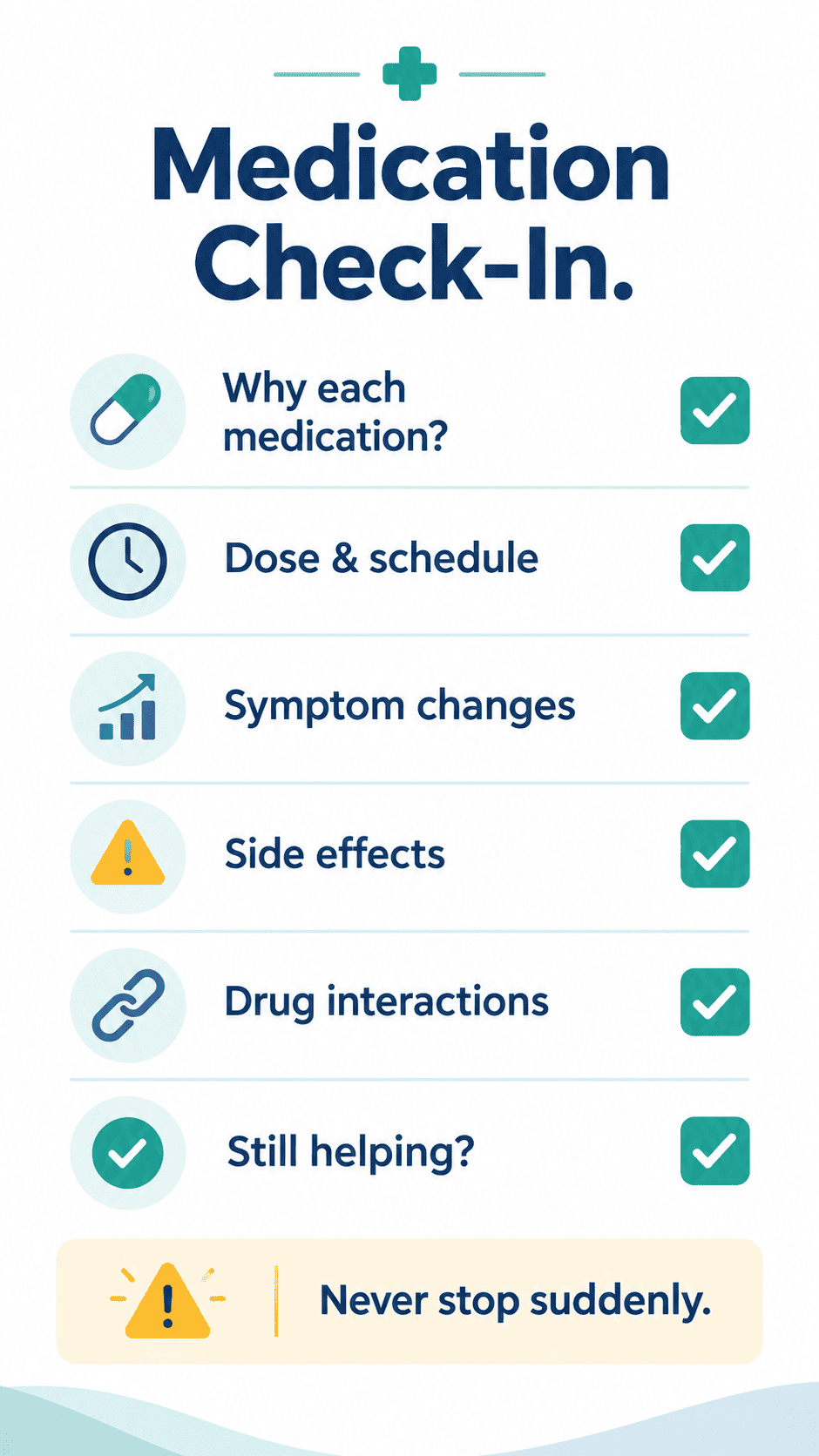
Psychiatric medication management involves choosing, monitoring, and adjusting medication based on your symptoms, treatment response, side effects, and overall health. Your psychiatrist should explain why a medication is prescribed, what to expect, and when to follow up.
During follow-up visits, your psychiatrist may review changes in mood, anxiety, sleep, appetite, focus, blood pressure, weight, or other relevant symptoms. They may also check for medication interactions, especially if you take multiple prescriptions, supplements, or over-the-counter products.
| What Your Psychiatrist Monitors | Why It Matters |
| Symptoms and treatment response | Helps determine whether the medication is providing enough benefit |
| Dosage and timing | Allows adjustments when the dose or schedule needs to change |
| Side effects | Helps identify unwanted effects that may require changes to treatment |
| Medication interactions | Reduces potential problems when taking multiple medications or supplements |
| Mood, sleep, appetite, and focus | Tracks changes that may indicate improvement or ongoing symptoms |
| Overall health | Helps ensure medication decisions consider relevant medical factors |
If a medication causes side effects or does not provide enough benefit, your psychiatrist may adjust the dose, change the timing, switch medications, or recommend additional monitoring. Do not stop psychiatric medication on your own because some medications can cause withdrawal symptoms or a return of symptoms when stopped suddenly.
How Does a Psychiatrist Help With Mental Health?

Some psychiatrists provide psychotherapy themselves, while others coordinate care with a therapist. Others focus mostly on medication and team up with a therapist for that side of things.
Therapy works on thoughts, feelings, behavior, relationships, coping skills. NIMH says therapy can ease symptoms and improve daily life, whether it’s used alone or paired with medication.
As noted by National Institute of Mental Health
”Psychotherapy can be used as an alternative to or alongside medication and other treatment options. Choosing the right treatment plan is based on a person’s individual needs and medical situation and should occur under the guidance of a mental health professional.” – National Institute of Mental Health
Common types include cognitive behavioral therapy, psychodynamic therapy, supportive therapy, and interpersonal therapy. The right clinical approach depends on your condition, your symptoms, and what you feel comfortable pursuing.
For many patients, psychiatrists recommend combining medication management with evidence-based psychotherapy. Prescribed medication stabilizes biological and neurochemical symptoms, while structured therapy helps you process behavioral triggers and emotional patterns. This integrated model is widely used for conditions like major depression, generalized anxiety, trauma, and obsessive-compulsive disorder (OCD).
Embracing Life Today emphasizes whole-person care by pairing psychiatric treatment with proven clinical modalities based on your unique needs. Neither therapy nor medication is universally required for every individual. Your clinical plan depends entirely on your diagnosis, symptom severity, past treatment response, and personal recovery goals.
When Might a Psychiatrist Consider TMS?

When standard treatment does not provide enough relief, your psychiatrist may consider an advanced option such as TMS therapy in Miami, FL, depending on your diagnosis and treatment history.
TMS is a non-invasive treatment that does not require surgery or anesthesia. At Embracing Life Today, FDA-cleared NeuroStar TMS may be considered for eligible patients with specific cleared indications, including major depressive disorder and OCD.
Your psychiatrist will review your medical history and safety factors before deciding whether TMS is appropriate for you.
Data from U.S. Food and Drug Administration demonstrates
”The NeuroStar Advanced Therapy System is intended to be used as an adjunct for the treatment of adult patients suffering from Obsessive-Compulsive Disorder (OCD).” – U.S. Food and Drug Administration
TMS doesn’t involve surgery or anesthesia. Patients stay awake the whole time and usually go about their day right after. Some people notice mild discomfort on the scalp. There’s also a small chance of seizure, though it’s rare.
It’s not for everyone though. Anyone with certain metal implants near the head, or specific devices in the body, may need to skip it. That’s why a full checkup comes first. TMS isn’t a first step. It’s not meant for mild depression, or for people already doing fine on medication.
So treatment can look pretty different depending on the person:
- Get a full evaluation first.
- Try therapy, medication, or both.
- Watch closely for progress and side effects.
- Check back in if things aren’t improving.
- Look into advanced treatments if the case fits.
Just because something is FDA cleared doesn’t mean it’s right for every patient. A psychiatrist still has to weigh the person’s history and safety before deciding anything.
When Should Someone Consider Seeing a Psychiatrist?
You should consider seeing a psychiatrist when mental health symptoms persist, worsen, or begin interfering with daily life. This may include ongoing changes in mood, sleep, appetite, concentration, behavior, work, school, relationships, or self-care.
A psychiatric evaluation may also be helpful when therapy or other treatments have not provided enough relief, or when you need medication evaluation or monitoring.
Consider professional psychiatric care when symptoms:
- Persist or keep returning
- Interfere with daily functioning
- Become harder to manage
- Require medication evaluation or monitoring
- Cause major changes in mood, sleep, appetite, or behavior
- Raise concerns about your safety
Access to psychiatric care can be difficult because of provider shortages, insurance restrictions, waitlists, and geographic limitations. Telepsychiatry may provide another option when in-person care is difficult to access.
If you are at immediate risk of suicide, serious self-harm, violence, or severe confusion, seek emergency help rather than waiting for a routine psychiatry appointment. In the U.S., call or text 988 for the Suicide & Crisis Lifeline, or call 911 for a life-threatening emergency.
How Does a Psychiatrist Help With Mental Health at Embracing Life Today?
Understanding how a psychiatrist helps with mental health allows you to take control of your wellness plan. At Embracing Life Today, care includes comprehensive evaluations, medication management, psychotherapy, and interventional psychiatry. If you are ready for individualized support, our compassionate clinical team can help you build a sustainable path forward. Contact us today to schedule your initial consultation.
FAQs
What should I bring to my first psychiatric visit?
You should bring a comprehensive list of all current prescriptions, over-the-counter medications, and dietary supplements. It is also helpful to bring previous mental health records, recent laboratory blood test results, and a written list of symptoms you want to discuss. Having this background information ready helps your doctor make an accurate assessment during your initial consultation.
Can a psychiatrist prescribe medication and provide talk therapy?
Yes, psychiatrists are licensed medical doctors who can prescribe medications and conduct structured psychotherapy sessions. While some psychiatrists focus primarily on medication management, many integrate supportive counseling into regular appointments or partner with outside licensed therapists. This collaborative care model ensures both biological symptoms and behavioral habits are addressed.
What is the difference between a psychologist and a psychiatrist?
A psychiatrist is a medical doctor who can order diagnostic lab work, evaluate physical health, and write prescriptions. A psychologist holds a doctoral degree in psychology and specializes in psychological testing, behavioral assessments, and talk therapy. Both professionals frequently collaborate to provide comprehensive mental health care.
What happens if my prescribed psychiatric medication does not work?
If your prescribed medication fails to relieve symptoms, your psychiatrist will review your dosage, check for interactions, or switch you to a different prescription. Your doctor may also evaluate lifestyle factors or recommend alternative evidence-based options like TMS therapy if past medications have not helped. You should always discuss treatment concerns directly with your clinician before making changes.
How does a psychiatrist help with mental health?
A psychiatrist helps with mental health during follow-up visits by reviewing your symptom changes, managing medication side effects, and adjusting dosages to keep you stable. These shorter check-ins give your doctor the ongoing data needed to protect your long-term wellness. Consistent follow-ups ensure your treatment plan evolves alongside your personal recovery goals.
References
- https://www.nimh.nih.gov/health/topics/psychotherapies?utm_campaign=CHD_depression-treatment
- https://www.nimh.nih.gov/health/topics/brain-stimulation-therapies/brain-stimulation-therapies


