Getting professional OCD treatment in Riverview provides local access to specialized cognitive behavioral therapy, exposure and response prevention, and psychiatric medication management.Finding the right clinical support requires looking beyond general therapy credentials to verify evidence-based expertise, treatment formats, insurance coverage, and advanced treatment options. Keep reading to learn what to look for when choosing OCD treatment with Embracing Life Today.
Key Takeaways
- ERP-based cognitive behavioral therapy serves as the primary behavioral treatment for OCD.
- Comparing provider qualifications, therapy formats, out-of-pocket costs, and insurance coverage leads to better clinical matches.
- Stepped levels of care, such as intensive outpatient programs or adjunctive TMS, help when outpatient therapy alone does not yield sufficient progress.
What Does Evidence-Based OCD Treatment Usually Include?
Clinical standards for managing obsessive-compulsive disorder rely on two core pillars: specialized behavioral therapy and psychiatric medication. Speaking with a licensed professional helps determine which path or combination fits your specific symptoms. If you wish to understand the clinical criteria and diagnostic steps involved, you can read our detailed overview on obsessive compulsive disorder.
Exposure and Response Prevention (ERP) is a specialized form of Cognitive Behavioral Therapy (CBT). During ERP, you gradually face thoughts, images, or situations that trigger distress while practicing how to refrain from performing ritualistic compulsions. Standard therapy often aims to reframe negative thoughts, but ERP specifically targets the behavioral loop that keeps anxiety alive.
| Standard OCD Care Option | Description |
| ERP Therapy | Gradual exposure to OCD-related fears without performing compulsions or rituals. |
| Medication | SSRIs or clomipramine prescribed and monitored under psychiatric care. |
| Combined Approach | ERP combined with medication management when clinically appropriate. |
| Intensive Care | More frequent therapy sessions or structured day programs for people who need additional support. |
The goal of ERP is not to instantly eliminate frightening thoughts. Instead, it helps you build tolerance for uncertainty and anxiety without relying on repetitive rituals. Over time, your brain learns through a process called inhibitory learning that uncomfortable feelings naturally subside without compulsions.
In a typical ERP session, you work with your therapist to construct an exposure hierarchy. This step-by-step ladder ranks triggers from mild distress to severe anxiety. You start with lower-level triggers, remaining in the triggering situation until your anxiety drops naturally. Preventing the physical or mental compulsion breaks the temporary relief cycle that reinforces OCD in the long run.
As highlighted by U.S. Food and Drug Administration
“OCD is typically treated with medication, psychotherapy or a combination of the two.” – U.S. Food and Drug Administration
Medication management forms another primary treatment avenue. Prescribers frequently utilize selective serotonin reuptake inhibitors (SSRIs), such as fluoxetine, fluvoxamine, paroxetine, or sertraline, as well as tricyclic options like clomipramine. A physician monitors dosages and side effects over time to evaluate effectiveness. High dosages are often required for OCD compared to generalized anxiety or depression.
Clinical studies reviewed by the American Psychological Association (APA) in 2026 estimate that approximately 65% to 80% of individuals experience meaningful symptom relief when completing structured ERP therapy. Because every individual experiences unique distress patterns, treatment plans must be personalized rather than delivered as a one-size-fits-all package.
How Can You Find a Qualified ERP Therapist?
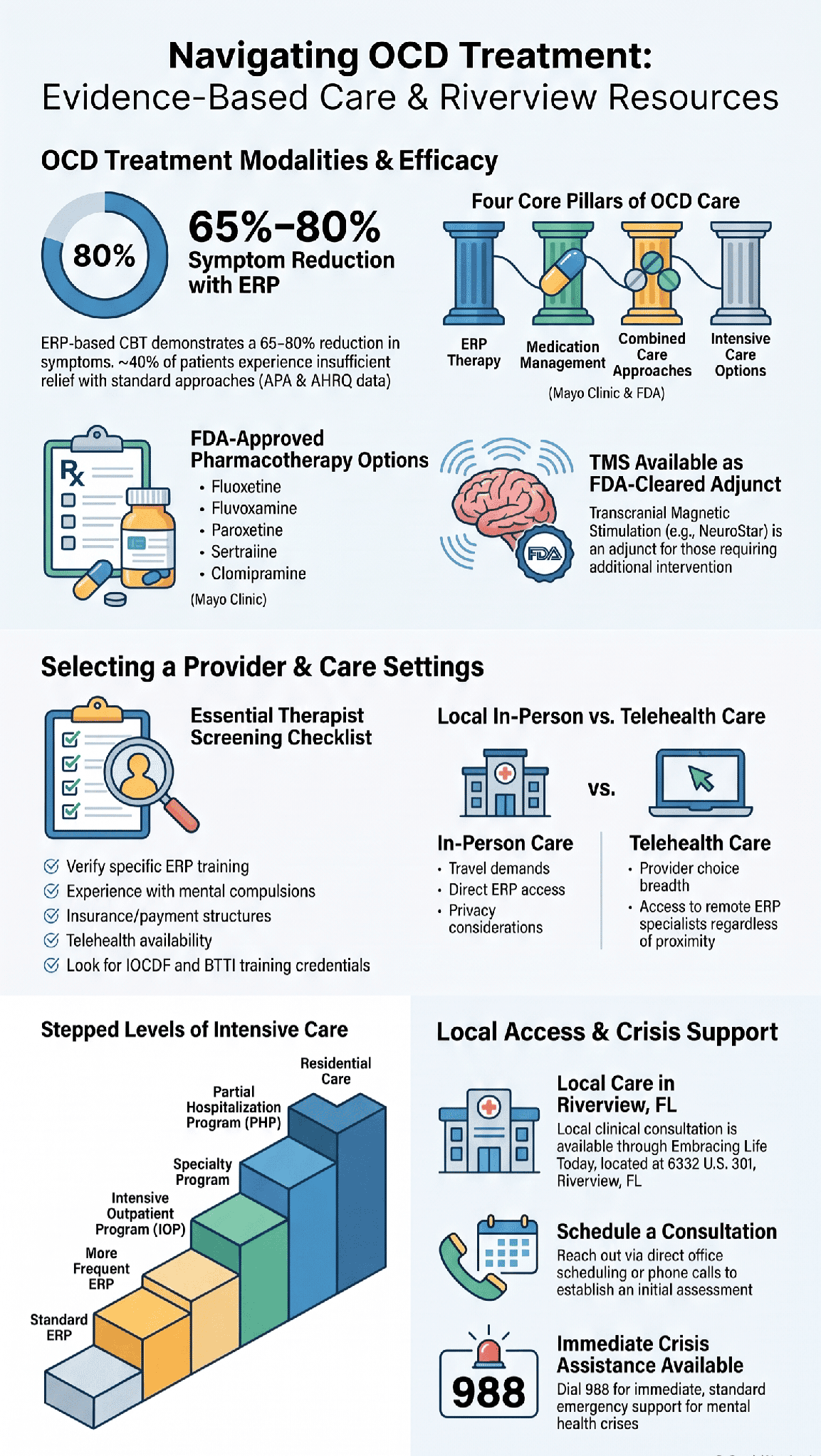
Finding a qualified therapist requires verifying specialized training rather than relying solely on general claims of expertise. Many general mental health counselors offer CBT, but standard CBT techniques like cognitive restructuring can sometimes backfire with OCD by becoming internal compulsions. Directories provided by the International OCD Foundation (IOCDF) confirm specific training credentials, such as completion of the Behavior Therapy Training Institute (BTTI) program.
Data published in a 2025 review by the Agency for Healthcare Research and Quality highlights that ERP delivered in person or through telehealth provides effective care for children, adolescents, and adults alike. Modern telehealth platforms allow specialized clinicians to conduct live exposures directly inside your home environment, where real-world triggers occur most often.
Data from Agency for Healthcare Research and Quality
“ERP, delivered in-person or via telehealth, is an effective treatment for OCD in children and adolescents. ERP, alone or in combination with an SSRI, is probably more effective than treatment with an SSRI alone.” – Agency for Healthcare Research and Quality
When interviewing prospective clinicians, ask direct questions regarding their therapeutic approach, frequency of ERP application, and experience addressing hidden compulsions. Hidden mental compulsions require careful clinical identification because they occur entirely within a person’s thoughts.
Here are some good questions for a first phone call:
- What ERP training have you finished?
- How often do you treat OCD?
- How do you spot mental compulsions?
- How do you fit exposure exercises to each person?
- Do you see people in person, online, or both?
- Which insurance plans do you take?
- What happens if ERP feels too hard at first?
Unaddressed mental rituals, such as silent counting, internal checking, or unspoken reassurance seeking, often stall therapeutic progress. A well-trained clinician actively targets these subtle compulsions within your personalized exposure hierarchy. Identifying these internal safety behaviors prevents silent interference during exposure practices.
What If Standard Therapy Feels Too Intense or Isn’t Working?

Feeling overwhelmed during initial exposure exercises does not mean you should abandon treatment. Instead, it indicates that you and your clinician need to adjust the pace or structure of your exposure hierarchy. Breaking down exposures into smaller, more manageable micro-steps helps rebuild confidence without overwhelming your central nervous system.
According to a 2026 clinical review by the APA, roughly 40% of patients do not achieve full symptom remission through standard first-line approaches alone. When progress stalls, clinicians re-evaluate whether hidden safety behaviors, severe co-occurring depression, or unmanaged anxiety are interfering with sessions. In these cases, stepping up care to advanced medical technology provides a renewed path forward.
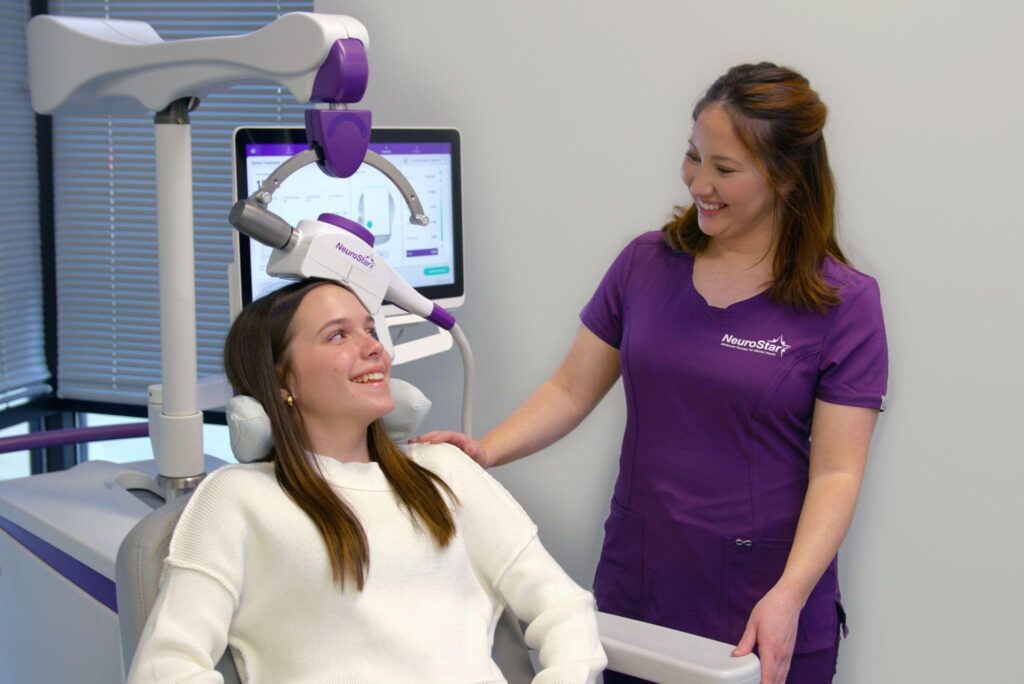
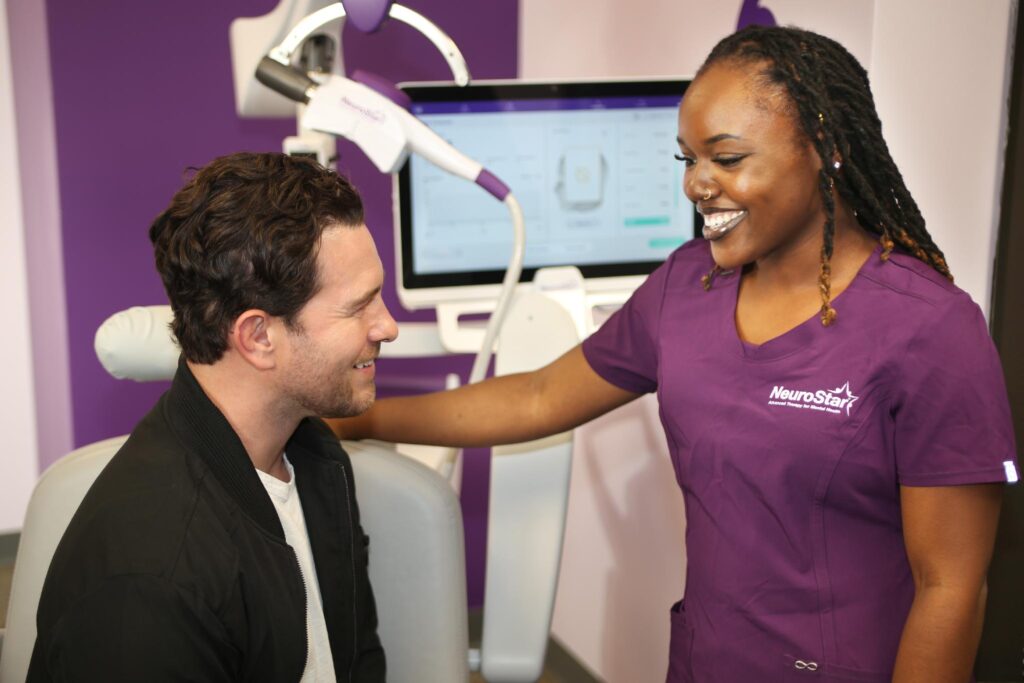
If recalibrating your exposure hierarchy still doesn’t provide enough relief, ask your provider whether TMS for OCD treatment is a suitable alternative or add-on treatment option. Transcranial Magnetic Stimulation (TMS) is a non-invasive treatment that uses targeted magnetic pulses to stimulate specific nerve cells in the brain region linked to OCD symptoms.
NeuroStar TMS offers a localized approach without systemic side effects like weight gain or sedation commonly associated with oral medications. Patients remain awake and alert during daily 20-minute sessions over several weeks. Clinical protocols often integrate brief exposure triggers right before TMS delivery to activate relevant brain circuits for optimal stimulation.
Combining TMS with ongoing ERP therapy often helps patients who previously found exposures unbearable. By dampening hyperactive brain circuits, TMS can reduce baseline anxiety levels, making it easier for individuals to engage with exposure exercises without engaging in compulsions.
How Do Insurance, Cost, and Telehealth Options Compare?
Navigating insurance coverage and scheduling formats helps narrow down practical choices. Telehealth opens up access to specialized care across Florida, while local offices offer traditional face-to-face interaction. Both delivery methods demonstrate comparable clinical outcome rates when led by qualified ERP practitioners.
| Factor | What to Check |
| Insurance | Whether the provider is in your network, your deductible and copay, and whether prior approval is required |
| Self-pay | The current cost per session or treatment program |
| Telehealth | Whether the provider treats patients in Florida and what technology is required |
| ERP access | The provider’s ERP training and experience treating OCD |
| Frequency | Whether appointments are weekly, twice weekly, or more intensive |
| Coordination | Whether the therapist can coordinate care with your prescriber if you take medication |
Before committing to care, verify network status, deductible obligations, and copay requirements with your insurance provider. Out-of-pocket expenses vary widely depending on whether you choose an in-network clinician or an out-of-network specialist. Many providers offer superbills for out-of-network reimbursement requests.
Understanding your financial responsibility upfront prevents unwanted surprises during treatment. When considering advanced care like TMS, most commercial health insurance plans and Medicare provide coverage policies when specific medical necessity criteria are met, such as prior trials of therapy and medications.
For detailed information on local clinical scheduling and setups, reviewing our dedicated TMS therapy in Riverview FL office location page clarifies what options are available in your immediate area. Finding care close to home simplifies attendance for daily or weekly appointments.
How Do You Choose the Best Path for Long-Term Recovery?

Selecting the right care involves balancing specialized clinical skills against practical considerations like scheduling, location, and cost. Long-term recovery requires learning skills that turn you into your own therapist over time. Working with a dedicated provider ensures that your treatment plan adapts as your needs evolve over time.
Building a sustainable relapse prevention plan forms the final phase of successful OCD treatment. This plan helps you identify early warning signs of returning compulsions, manage stress spikes, and re-engage exposure principles independently. Family involvement or support group participation can also reinforce progress made in individual therapy sessions.
For individuals seeking comprehensive OCD treatment, the Riverview area offers access to evidence-based outpatient ERP, psychiatric medication coordination, and advanced non-invasive options like TMS therapy designed to support sustainable mental health.
Taking the initiative to ask informed questions empowers you to choose a clinical team aligned with your goals.
Choosing the Right Care for OCD in Riverview
Finding the right OCD care in Riverview can feel overwhelming when you’re trying to compare providers and understand what care actually fits your needs. Look for experience with ERP and ask how a provider handles mental compulsions, exposure planning, appointment frequency, and costs. The IOCDF directory can help you find qualified local or telehealth options, while the APA supports evidence-based care centered on psychotherapy, ERP, and medication when clinically appropriate.
If you’re considering Embracing Life Today, you can explore our Riverview services and see whether our approach fits what you’re looking for. Taking that first step doesn’t mean committing to treatment; it simply gives you a chance to ask questions and understand your options. Schedule a consultation with Embracing Life Today to take the next step toward recovery.
Frequently Asked Questions
What is obsessive-compulsive disorder therapy in Riverview?
Obsessive-compulsive disorder therapy involves structured cognitive behavioral therapy centered on exposure and response prevention, alongside psychiatric medication when recommended by a clinician.
Is ERP therapy the same as standard CBT?
ERP is a specialized component of CBT that specifically focuses on systematic exposure to feared triggers while actively refraining from compulsive rituals.
Can medication be used alongside exposure therapy?
Yes, prescribers frequently combine SSRIs or clomipramine with structured ERP sessions to enhance overall therapeutic outcomes.
Is TMS therapy FDA cleared for treating OCD?
Yes, NeuroStar TMS is FDA cleared as an adjunctive treatment for adult OCD when traditional standard therapies have not yielded sufficient relief.
How does OCD treatment in Riverview begin?
Beginning OCD treatment in Riverview starts with a comprehensive diagnostic evaluation to build a customized exposure hierarchy and treatment strategy.
Emergency Notice
If you or someone you know is experiencing a mental health crisis, immediate danger, or severe distress, please call or text 988 to reach the Suicide & Crisis Lifeline, or call 911 for emergency services.
References
- https://www.fda.gov/news-events/press-announcements/fda-permits-marketing-transcranial-magnetic-stimulation-treatment-obsessive-compulsive-disorder
- https://www.ncbi.nlm.nih.gov/books/NBK611136/?cmd=ClearHT